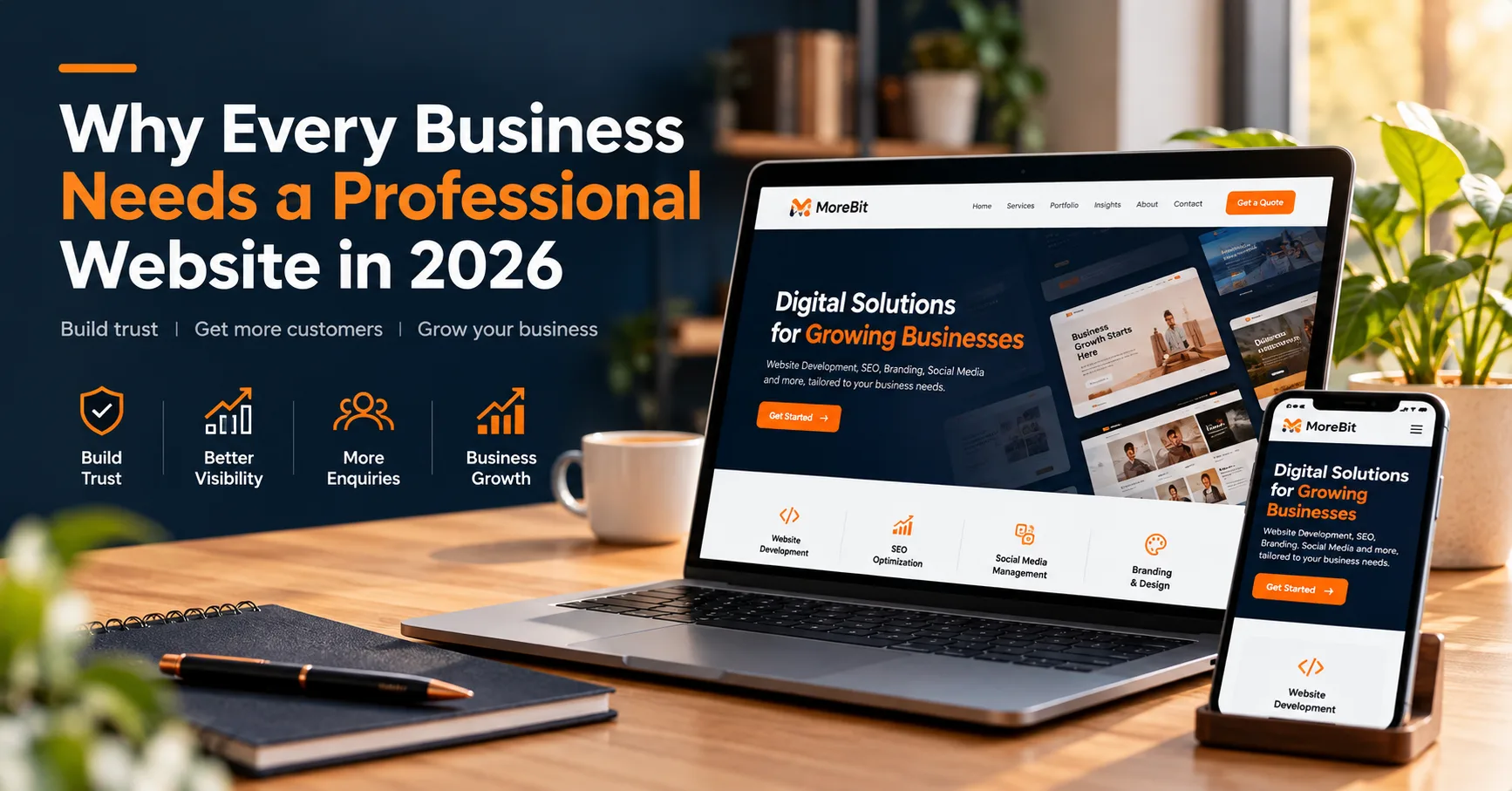
Why Every Business Needs a Professional Website in 2026
In today's digital world, customers often research a business online before deciding to contact it, visit its location, or make a purchase. Whether you run a local shop, a service-based business, a consultancy, or a growing company, your online presence can influence how potential customers perceive your brand.
Social media platforms are useful for reaching audiences, but a professional website gives your business a dedicated online space where customers can learn about your services, understand your value, and contact you directly.
In this guide, we explore why having a professional website matters in 2026 and how it can support your business growth.
1. Build Trust and Make a Strong First Impression
Your website is often one of the first places potential customers visit when researching your business.
A professional website can help visitors understand who you are, what you offer, and how to get in touch with you. Clear service information, genuine project examples, contact details, and a consistent brand identity can make your business appear more credible and approachable.
An outdated, confusing, or incomplete website may make it harder for visitors to understand your offering.
What your business website should include:
- A clear homepage explaining your business.
- Dedicated service or product information.
- Genuine testimonials or project examples, where available.
- Accurate contact details and enquiry options.
- A consistent and professional visual identity.
Trust is built through accurate information and a good customer experience, not design alone.
2. Help Customers Discover Your Business on Google
A website creates opportunities for your business to appear in relevant Google search results.
For example, someone searching for a service in their area may discover businesses through local search results, business profiles, and relevant website pages.
However, simply launching a website does not guarantee that it will rank on Google. Your website also needs useful content, appropriate technical SEO, relevant page titles, crawlable pages, and a good user experience.
To improve your search visibility:
- Create dedicated pages for the services you actually offer.
- Use descriptive page titles and headings.
- Answer common questions your potential customers ask.
- Keep your website mobile-friendly and technically accessible.
- Add relevant internal links between articles and service pages.
- Monitor search performance through Google Search Console.
SEO is an ongoing process. Results depend on competition, relevance, website quality, and many other factors.
3. Turn Website Visitors into Customer Enquiries
A business website should do more than display information. It should make it easy for interested visitors to take the next step.
Depending on your business model, that next step could be requesting a quotation, booking an appointment, calling your business, sending a WhatsApp message, or submitting an enquiry form.
You can improve your chances of receiving relevant enquiries by adding:
- Clear calls to action such as "Get a Quote" or "Contact Us".
- Simple enquiry forms with only the necessary fields.
- Click-to-call and WhatsApp contact options where appropriate.
- Clear descriptions of services, pricing approach, or next steps.
- Useful answers to common customer questions.
Keep the enquiry process simple. Asking for too much information too early can discourage potential customers from contacting you.
4. Stay in Control of Your Online Presence
Social media platforms can be valuable marketing channels, but your business depends partly on their policies, features, and algorithms.
A website gives you greater control over how your business information, services, portfolio, and contact options are presented.
You can also connect your website with relevant channels such as Google Business Profile, social media accounts, email campaigns, and online advertising.
These channels work best when they support a consistent business presence and direct interested customers to useful information.
Your website should complement social media rather than replace it.
5. Showcase Your Services and Previous Work
Potential customers often want to understand what you do before they contact you.
A well-organized website can explain your services in detail and show relevant examples of your work.
For service businesses, useful website sections may include:
- Services and deliverables.
- Portfolio and completed projects.
- Case studies with accurate project details.
- Frequently asked questions.
- About the business and its working process.
- Contact information and enquiry options.
Use real projects and verifiable information. Do not publish client work, testimonials, or performance claims without appropriate permission or evidence.
A clear portfolio helps visitors assess whether your services match their requirements.
6. Give Customers a Better Mobile Experience
Many people browse websites using smartphones. If a website is difficult to read or navigate on a small screen, visitors may struggle to find the information they need.
A mobile-friendly website should have:
- Readable text and clear headings.
- Responsive layouts that adapt to different screen sizes.
- Buttons and links that are easy to tap.
- Forms that work comfortably on mobile devices.
- Images that load efficiently.
- Navigation that is simple to understand.
Website performance also matters. Optimizing images, reducing unnecessary scripts, and improving loading behaviour can contribute to a better experience.
A professional website should work well on mobile, tablet, and desktop devices.
7. Support Your Digital Marketing Efforts
Your website can act as the central destination for different marketing activities.
For example, you can direct visitors from social media posts, Google Ads, email campaigns, and relevant online listings to a specific service page or landing page.
This makes it easier to give potential customers relevant information and measure which channels generate enquiries.
With appropriate analytics and conversion tracking, you can assess metrics such as:
- Website visits from different channels.
- Most frequently visited service pages.
- Enquiry form submissions.
- WhatsApp clicks and phone calls, where tracked.
- Landing pages that generate qualified enquiries.
These insights can help you make better-informed marketing decisions instead of relying only on impressions or follower counts.
8. Create a Foundation for Long-Term Business Growth
A website can grow alongside your business.
You might start with a simple website explaining your services and contact information. As your requirements develop, you can add service pages, a portfolio, useful articles, appointment booking, an online store, or other functionality where appropriate.
The important thing is to build around your actual business needs rather than adding features simply because they are available.
A well-planned website should be maintainable, secure, accessible, and easy to update as your business changes.
9. What Should a Professional Business Website Include?
If you are planning a new website or redesigning an existing one, consider the following checklist.
- Homepage: A clear explanation of your business and its value.
- About Us: Genuine information about your business and approach.
- Services: Separate, useful pages for your main services.
- Portfolio: Relevant examples of your work, where available.
- Contact Us: Accurate contact information and an easy enquiry process.
- Privacy Policy: Appropriate information about personal data handling.
- Terms and Conditions: Relevant terms for website use and services.
- SEO Fundamentals: Descriptive titles, appropriate headings, canonical URLs, and crawlable content.
- Mobile Responsiveness: A consistent experience across screen sizes.
- Performance and Security: Appropriate optimization, HTTPS, and secure form handling.
- Analytics: Suitable measurement of website traffic and enquiries.
The exact requirements depend on the type, size, and purpose of your business website.
10. Is a Website Worth the Investment for a Small Business?
A website can be a valuable business asset, but its value depends on how well it supports your goals.
Before investing, identify what you want the website to achieve. You may want to improve your credibility, explain complex services, generate enquiries, display your portfolio, or support your advertising campaigns.
Choose a solution that fits your budget and requirements. Consider not only the initial development cost but also domain renewal, hosting, maintenance, security, content updates, and any ongoing marketing expenses.
A website should be evaluated by its usefulness to your business and customers, not simply by how many pages it contains.
Conclusion
A professional website can help your business establish credibility, explain its services, improve its discoverability, and create a convenient way for potential customers to get in touch.
However, a website is not a guarantee of more sales or higher Google rankings. Its effectiveness depends on useful content, thoughtful design, technical quality, appropriate marketing, and consistent improvement.
If your business is planning a new website or considering an upgrade, start by identifying your customers' needs and the outcomes you want to achieve.
Planning a Website for Your Business?
MoreBit helps businesses build and improve their digital presence through website development, SEO, branding, social media management, and website maintenance, based on their requirements.
Want to discuss your project?
Visit MoreBit or contact us at hello.morebit@gmail.com to discuss your requirements.